
Best Practices for Stone Placement in Landscaping
Why Stone Is a Smart Choice for Your Landscape Design
As homeowners, we’re constantly looking for ways to enhance the value and appeal of our home.
Beyond being a durable option, stone adds natural elegance while bringing texture, depth, and character to your outdoor landscape. To achieve a successful and visually appealing installation, it’s important to understand the key techniques, potential challenges, and expert recommendations before transforming your outdoor space.
What Type of Stone Should You Choose for Your Landscaping Project?
First, it’s crucial to understand the different types of stone available. Each variety of stone own unique characteristics that meet specific aesthetic and functional needs.
Here are some of the types of stone frequently used in landscaping:
Natural Stone Slab
Large, flat pieces of natural stone, often cut and finished for a variety of applications, stone slabs are available in a wide range of colors, textures, and patterns. Their versatility and timeless appeal make them a popular choice for outdoor landscaping projects.
- Premium patios and terraces: Create durable and elegant outdoor living spaces.
- Pool surrounds: Design slip-resistant, attractive surfaces around swimming areas.
- Garden pathways and stepping stones: Arrange spaced slabs across lawns or gravel beds to form natural walkways.
- Monumental outdoor stairways: Build impressive steps to accommodate significant changes in elevation.
- Outdoor fire pit areas: Create inviting, heat-resistant gathering spaces.
Boulders
These large natural stones come in a variety of sizes, shapes, and colors, ranging from just a few inches to several feet in diameter. Boulders bring a sense of strength, permanence, and stability to outdoor spaces. They are often used as focal points or functional elements in landscape designs.
- Natural retaining walls: Help stabilize slopes and manage changes in elevation.
- Waterfalls and ponds: Serve as structural elements for creating natural-looking water features.
- Rock gardens: Act as striking focal points within landscaped areas.
- Decorative barriers: Define spaces and help restrict vehicle access while enhancing the overall aesthetic.
Natural stone (river stone)
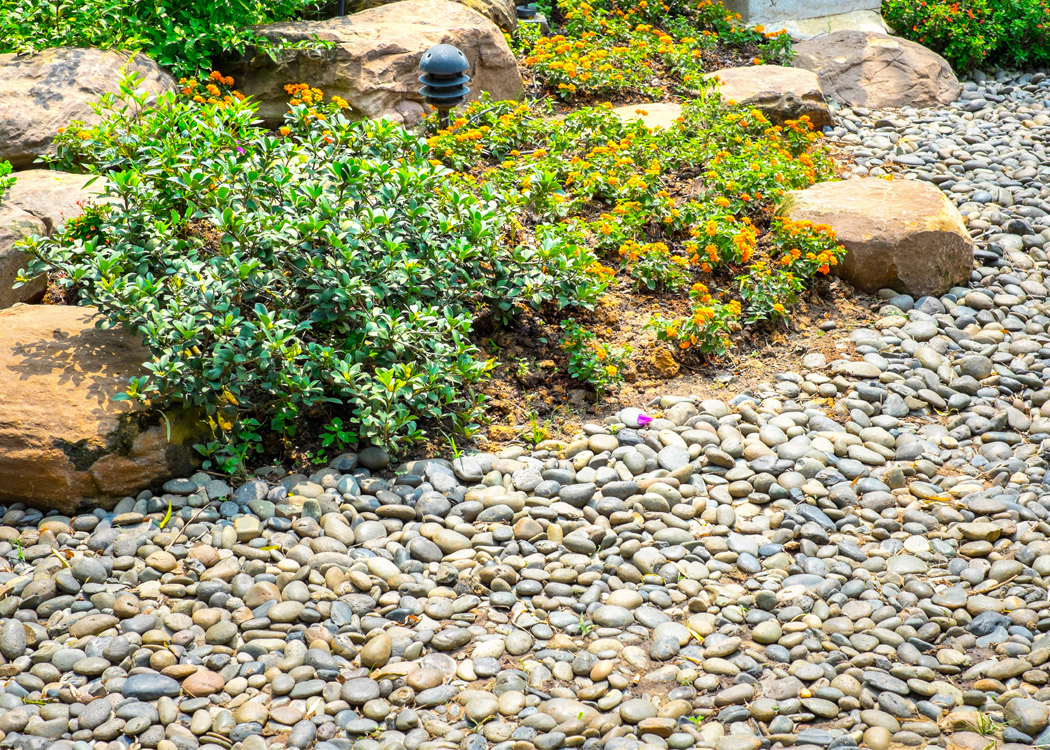
River stones are smooth, rounded stones shaped by years of natural erosion. Typically sourced from riverbeds, they are available in a variety of sizes, colors, and textures. Their versatility and organic appearance make them an excellent choice for creating a calm, natural outdoor environment.
- Decorative drainage features: Create dry creek beds or stone channels to help direct rainwater runoff.
- Garden edging: Define lawns and flower beds with a natural, attractive border.
- Outdoor relaxation areas: Ideal for Japanese gardens, meditation spaces, and other tranquil landscape designs.
- Mineral mulch: A durable alternative to wood mulch that helps retain soil moisture and requires minimal maintenance.
Planning to Take on One of These Landscaping Projects? Groupe Bellemare offers natural stone of the highest quality on the market!
Crushed stone (gravel)
Gravel is a versatile crushed stone material widely used in both landscaping and construction projects. Made up of small rock fragments, it is available in a variety of sizes to suit different applications.
- Driveways: A cost-effective option that provides a stable, well-drained surface.
- French drains: Commonly used around building foundations to promote efficient water drainage.
- Outdoor living spaces: Ideal for creating fire pit areas, patios, or European-inspired outdoor settings.
- Walking paths: Perfect for designing attractive and functional pathways throughout a property.
Planning to Take on One of These Landscaping Projects? Our quarries produce crushed stone for a wide range of projects.
The Importance of Proper Site Assessment
A successful stone laying project begins with a thorough site analysis. By understanding the characteristics of your land, you can make informed decisions about the stone setting.
Key factors to consider when analyzing the site include:
- Sun exposure: Identify areas exposed to direct sunlight, partial shade and full shade to determine appropriate stone choices.
- Drainage: Assess water flow paths to avoid potential problems such as flooding or erosion around stones.
- Existing vegetation: Work with natural contours and existing vegetation to integrate the stones harmoniously into the landscape.
- Functional requirements: Identify the purpose of the stones you wish to add to your landscape. Will they be used to create a fire pit, delimit garden spaces or prevent soil erosion?
Design priciples for stone placement
Proper stone placement is essential to creating a visually appealing landscape. Keep the following design principles in mind when planning your arrangement.
Use natural lines
- Curves: Avoid straight lines, preferring gentle curves to create a natural, relaxed atmosphere.
- Respect the topography: Respect the natural contours of the land to ensure that the stones blend harmoniously into their surroundings.
- Focal points: Create focal points using larger stones to attract the eye and give a sense of balance and hierarchy.
Strike the right balance
- Symmetry: Symmetrical stone arrangements work wonderfully for more formal landscapes and provide a sense of order.
- Asymmetry: For a more relaxed, organic look, opt for asymmetrical stone arrangements. This involves placing stones at varying distances and angles.
- Scale and proportion: Select stones that match the scale of your plot to avoid effects that are too striking or too discreet.
Technical challenges of stone installation
Working with stone often involves significant logistical and technical considerations, including:
- Weight and safety: Large stones are often very heavy, so always ask for help or contact professionals when handling them.
- Stability: Make sure the stones are properly embedded in the ground. Use gravel or sand as a base to improve stability and prevent shifting over time.
- Winter: Be aware of seasonal changes and the challenges they bring. In winter, freezing, thawing and snowstorms can damage your stones. You’ll also need to take care when clearing snow from your property, whether with a shovel or a snow blower.
- Maintenance: Choose low-maintenance, weather-resistant stones for longevity and appearance.
Expert Tips for Successful Stone Placement
- Overlay: Create depth and dimension by layering stones of different sizes, shapes and colours.
- Contrast: Use contrasting colours and textures to highlight the beauty of individual stones and create an interesting effect.
- Test settings: Before finalizing the installation, experiment with temporary stone layouts to assess their visual impact on your landscape.
- Patience: Stone setting is an art that requires patience and experimentation. Take your time to achieve the desired effect!
Large-Scale Projects: The Advantages of a Stone Slinger Truck
Renting a stone slinger is an excellent option for large landscaping projects or difficult-to-access sites. These machines are designed to transport and spread various materials, such as sand, stone, gravel or soil, with precision.
Here are the main advantages of a stone slinger:
- Precise slinging of materials up to 90 feet
- Quick installation with no loss of material
- No breakage of footings, drains or grounds
- Efficient for residential and commercial projects
FAQ: Frequently Asked Questions
What is the best stone for a garden pathway?
Stone slabs are an excellent choice if you're looking for a flat, stable walking surface. For a more budget-friendly option, crushed stone (gravel) is a great alternative. It is easy to install and provides excellent drainage.
How can I prevent weeds from growing between stones?
The most effective solution is to install a professional-grade geotextile fabric beneath the gravel or sand base. For stone slabs, using polymeric sand in the joints helps prevent weed growth while improving stability.
What type of stone should I use around a swimming pool?
Natural stone slabs are often the preferred option for pool surrounds because they are comfortable underfoot and highly durable. Choose a stone with a slightly textured surface to ensure slip resistance, even when wet.
How do I stabilize large boulders on a slope?
Proper anchoring is essential. As a general rule, at least one-third of the boulder's height should be buried below ground level. On steeper slopes, a compacted crushed stone base is recommended to prevent shifting caused by erosion or freeze-thaw cycles.
Can winter frost damage natural stone?
Natural stone is extremely durable, but freeze-thaw cycles can cause movement if the stone is not installed correctly. A well-drained gravel foundation is key to allowing water to escape before it freezes and lifts the stone.
Why rent a stone slinger truck instead of using an excavator?
A stone slinger truck is faster and far less disruptive to the surrounding landscape. Unlike an excavator, it does not need to travel across lawns or existing hardscapes, reducing the risk of damage. It can also place materials with remarkable precision at distances of up to 90 feet, making it ideal for hard-to-reach areas.
Ready to Transform Your Outdoor Space? Contact us today to rent a stone slinger or to source high-quality stone products for your next landscaping project.
