
How to renovate an aging concrete driveway: options, steps and practical tips
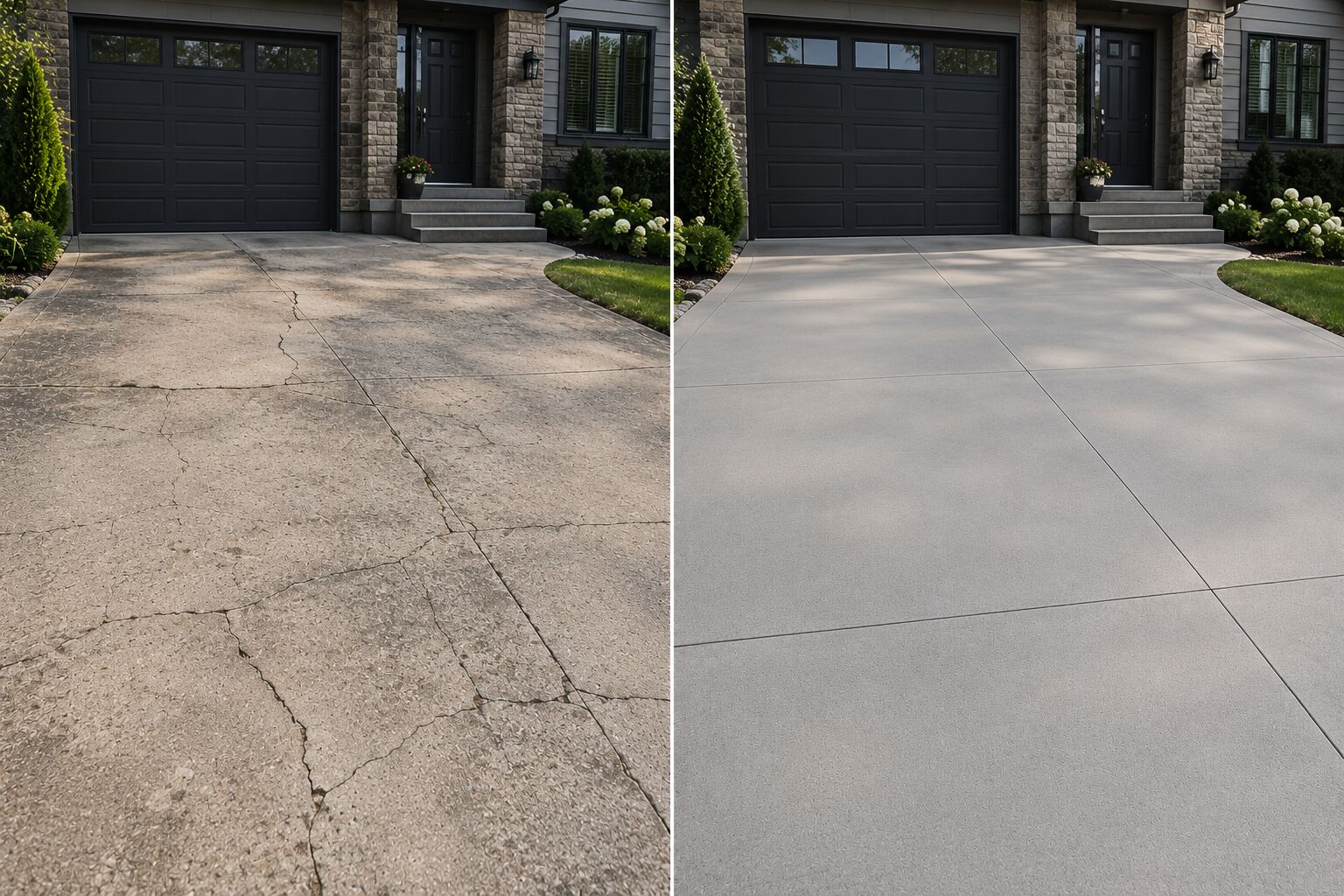
Is your concrete driveway showing signs of wear such as cracks, stains or an uneven surface? Replacing the entire driveway isn't always necessary. In many cases, it can be successfully restored without starting from scratch. Here are the main renovation options available and the key steps to help you achieve long-lasting results.
💡 Did you know?
Concrete is one of the most durable materials available for residential driveways. When installed on a properly prepared foundation, built according to industry’s best practices and maintained regularly, a concrete driveway can maintain both its performance and appearance for decades.
Why renovate a concrete driveway?
Over time, even a well-built concrete driveway will begin to show signs of wear. Recognizing these early warning signs can help you prevent more extensive and costly repairs later on.
Signs of wear to watch for
Visible cracks: Not all cracks are cause for concern. Some are superficial and have little impact on the structural integrity of the driveway, while others may indicate foundation movement, drainage issues or soil settlement. Monitoring how cracks evolve is often more important than their initial appearance. Cracks that continue to widen, multiply or develop uneven edges should be addressed promptly to prevent water infiltration and further concrete deterioration.
Crumbling concrete: A surface that is flaking, scaling or chipping may indicate deterioration caused by freeze-thaw cycles, de-icing salts or poor finishing practices. Left untreated, the damage can worsen quickly.
Settlement or uneven sections: A driveway with sunken or uneven areas is not only unattractive but can also create safety hazards. These issues often result from inadequate base compaction or soil erosion caused by water infiltration.
Standing water or improper drainage: If water pools on your driveway or drains toward your home instead of away from it, improper grading or drainage is likely the cause. Over time, this can contribute to soil erosion, mold growth and even foundation damage.
Persistent stains (oil, rust or mold): Deep, embedded stains detract from the appearance of your driveway and can become more difficult to remove when the concrete is not protected with a quality sealer. They may also create a slippery surface when wet.
The risks of delaying repairs
Ignoring signs of deterioration can lead to costly—and sometimes hazardous—consequences, including:
Drainage problems: Poor water drainage can damage the soil surrounding your driveway, contribute to slab settlement and even affect the foundation of nearby structures.
Accelerated concrete deterioration:Water that penetrates cracks or the concrete's pores accelerates freeze-thaw damage and speeds up deterioration. The longer repairs are postponed, the more extensive and expensive they are likely to become.
Increased risk of falls: Cracked, uneven or slippery surfaces significantly increase the risk of slips and falls.
Reduced curb appeal and property value: A deteriorated driveway negatively impacts your home's appearance. If you're planning to sell your property, it may discourage potential buyers.
Before choosing a repair method, make sure the foundation beneath the concrete slab remains stable. A foundation that has lost its load-bearing capacity will often cause the same problems to reappear, even after quality repairs have been completed. When in doubt, have your driveway evaluated by a qualified professional.
Options for renovating a concrete driveway
The best renovation method depends on your driveway's current condition, your budget and your long-term goals. Here are the most common solutions.
Deep cleaning and sealing
This option is ideal for driveways that remain structurally sound and have no significant cracking. In many cases, thorough cleaning followed by a quality sealer can dramatically improve the driveway's appearance.
- Pressure washing and degreasing: Pressure washing removes oil stains, dirt, mold and environmental contaminants. Proper cleaning also reveals the true condition of the concrete before repairs begin.
- Applying a protective sealer: A concrete sealer (such as an acrylic or solvent-based product) helps protect the surface from moisture, stains, UV exposure and de-icing salts. Most sealers also enhance the natural appearance of concrete while providing a matte, satin or glossy finish depending on the type of sealer selected.
Crack repair and concrete resurfacing
This solution is recommended when the driveway has minor cracks or moderate surface wear.
- Crack repair: Cracks can be repaired using products such as concrete crack fillers, repair mortars or flexible sealants. The primary goal is to prevent water infiltration, which accelerates concrete deterioration.
- Concrete resurfacing: A thin resurfacing mortar is applied across the entire driveway to restore a uniform appearance, conceal minor surface imperfections and renew the texture. Depending on the product used, it may be applied with a trowel, roller or squeegee.
Partial repair or section replacement
This option is appropriate when only certain areas of the driveway are severely damaged or have settled over time.
- Localized saw cutting and removal: Damaged sections are cut out using a concrete saw and removed without affecting the rest of the driveway. This targeted approach helps preserve the sound portions of the existing slab while addressing localized issues.
- New concrete placement:
The removed section is replaced with new concrete and carefully leveled to match the surrounding surface. Discover our concrete products
Benefits: This solution is generally more cost-effective than replacing the entire driveway and allows localized structural issues—such as poor drainage or settlement—to be corrected.
Covering the driveway with other materials
This premium option completely transforms the appearance of an existing concrete driveway.
- Installing pavers, slabs or natural stone: In some situations, pavers, slabs or natural stone can be installed over an existing concrete slab, provided it is structurally sound and the installation method is appropriate for the selected material.
- Enhanced aesthetics: These materials are available in a wide range of colors, textures and patterns, allowing you to create a driveway that complements the style of your home.
- Durability and low maintenance: Most paving stones and many natural stone products offer excellent resistance to freeze-thaw cycles, de-icing salts and repeated vehicle traffic.
Keep in mind: This option generally requires a larger investment and professional installation to ensure long-term performance.
Concrete retaining wall blocks can also be incorporated to border your driveway and enhance the overall appearance of your landscaping.
When should you replace your concrete driveway?
Although many issues can be corrected through repairs or resurfacing, some situations call for a complete driveway replacement.
A full replacement is generally recommended when:
- multiple sections of the slab have settled;
- cracks are numerous, deep or continue to worsen;
- the foundation is unstable or shows significant settlement;
- large portions of the concrete are crumbling or deteriorating;
- previous repairs have failed to provide lasting results.
A qualified professional can determine whether repairs are sufficient or whether replacing the entire driveway will provide the best long-term value.
General steps for renovating a concrete driveway
- Inspect the Concrete Slab
Before starting any work, carefully evaluate the condition of the existing concrete. Look for cracks, settlement, scaling, deep stains and other signs of deterioration. Also verify that the slab remains structurally sound and that drainage slopes are functioning properly.
Identify any areas requiring localized repairs or complete replacement. This initial assessment will help determine whether cleaning and sealing are sufficient or whether resurfacing or partial replacement is necessary.
- Pressure Wash or Strip the Surface
Thorough cleaning is essential to ensure proper adhesion of repair materials and surface treatments. Use a pressure washer to remove dirt, oil stains and surface contaminants. In some cases, stripping may be necessary, particularly if the driveway has previously been painted or sealed. Oil-contaminated areas should be treated with a specialized concrete degreaser. Allow the slab to dry completely before moving on to the next step—typically at least 24 hours, depending on weather conditions.
- Repair Cracks and Surface Damage
Once the concrete is clean and dry, repair any existing damage. For small cracks, use a concrete crack filler or flexible sealant. For wider cracks, use an appropriate repair mortar or epoxy repair product. Surface chips, spalls or holes should be repaired using a concrete patching compound specifically designed for this purpose. Completing these repairs before applying a resurfacer or sealer helps prevent imperfections from reappearing prematurely.
- Prepare the Surface Before Application
When recommended by the manufacturer, apply a bonding primer or bonding agent to improve adhesion between the existing concrete and the new resurfacing material. Some resurfacing products already contain integrated bonding agents, so always follow the manufacturer's instructions and recommended waiting times between application steps.
- Apply the New Surface or Sealer
For resurfacing projects, apply the resurfacing material evenly across the entire driveway using a trowel or roller, depending on the product. Work in manageable sections to avoid visible lap marks. When applying a concrete sealer, use either a roller or sprayer and apply one or two uniform coats according to the manufacturer's recommendations.
- Finishing, Protection and Drying Time
Once the resurfacing material or sealer has been applied, allow it to dry according to the manufacturer's instructions—typically between 24 and 72 hours, depending on the product and weather conditions.
Protect the surface from rain and excessive sunlight during the drying period, and avoid both foot and vehicle traffic until the surface is fully ready for use.
To maximize long-term performance, many sealers should be reapplied every two to three years, depending on the product and exposure conditions.
How long does a concrete driveway last?
The lifespan of a concrete driveway depends primarily on the quality of its design, the condition of its foundation, the materials used and the level of ongoing maintenance.
Under normal conditions and with proper care, a concrete driveway can last 30 to 40 years—or even longer.
To maximize its lifespan, it is recommended to:
- maintain proper drainage around the driveway;
- repair cracks promptly to prevent water infiltration;
- apply a concrete sealer whenever recommended for the product used;
- clean oil stains and other contaminants before they penetrate the concrete;
- use de-icing salts sparingly, particularly during the first few winters after the concrete has been placed.
Routine preventive maintenance can often help avoid much more costly repairs down the road.
Frequently asked questions
Should I replace my driveway if it's cracked?
Not necessarily. If the cracks are minor and the concrete slab remains structurally sound, repairing or resurfacing the driveway is often sufficient.
Can I renovate a concrete driveway myself?
Yes, simple repairs such as cleaning, sealing or filling small cracks can often be completed by homeowners.
However, resurfacing, structural repairs or slab replacement should generally be performed by qualified professionals to ensure lasting results.
Renovating a concrete driveway is often simpler than many homeowners expect. With the right techniques, proper preparation and quality materials, you can restore your driveway's appearance, functionality and durability without necessarily replacing the entire slab.
Additional Resources
For more information on concrete installation, maintenance and best practices, explore our related articles:
How to Waterproof and Protect Concrete for Maximum Durability
How to choose the ideal concrete slab thickness based on its intended use
How to Calculate the Right Amount of Concrete for Your Project
Concrete work in cold weather: how to do it?
Winter: Tips to prepare and protect your concrete or asphalt driveway
What to know before building a concrete patio
Asphalt or Concrete Driveway: Which option is best for your home?
Every driveway is different. If you're unsure about the condition of your concrete driveway, don't hesitate to consult a concrete professional. A proper assessment can help identify the most durable and cost-effective solution for your specific situation.
